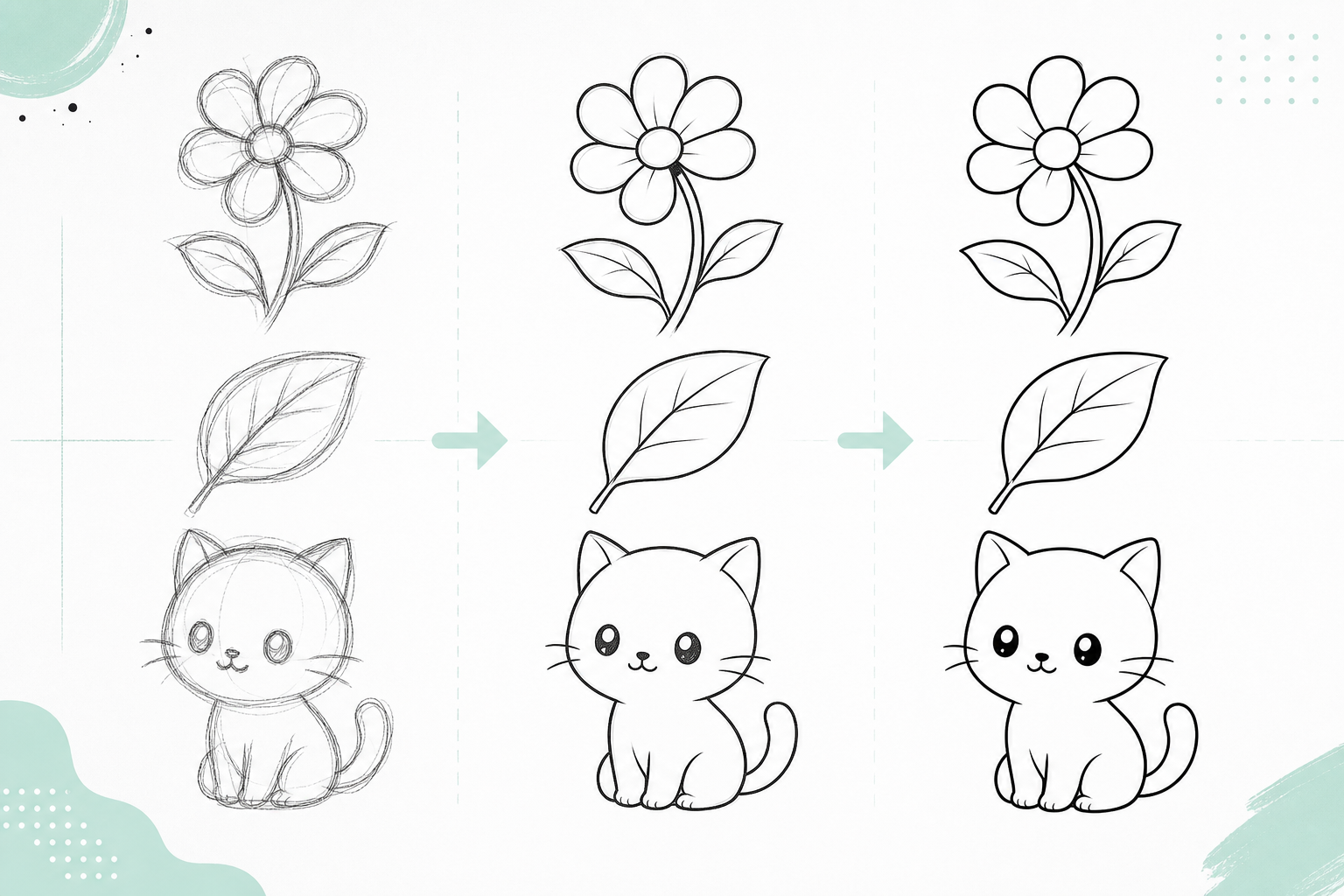
Clean line art is not about having a perfect hand. It comes from simple shapes, smart layers, and a brush setup that supports your natural drawing motion.
1. Sketch on a Separate Layer
Keep your rough sketch on its own layer. When the sketch and final line art are separated, you can edit freely without damaging your final drawing.
2. Lower Sketch Opacity
Set your sketch layer opacity to around 20-30%. This makes it easier to see your final line without visual clutter.
3. Use Longer Confident Strokes
Instead of building one line with many tiny strokes, try drawing longer strokes with your whole wrist or arm. Undo and redraw until the curve feels clean.
4. Turn on Stabilization
If your lines shake, adjust StreamLine or Stabilization in your brush settings. Use enough help to smooth the line, but not so much that it feels hard to control.
5. Zoom Less Than You Think
Zooming in too much can make your lines look stiff. Work at a comfortable zoom level so your strokes stay natural.
6. Clean Intersections Last
Do not erase every tiny mistake while drawing. Finish the big shapes first, then clean corners, overlaps, and line endings.
7. Practice Simple Shapes
Circles, leaves, ribbons, and simple animals are great line art exercises. Clean lines improve faster when the subject is simple.
Beginner tip: line confidence matters more than line perfection.